


 Cart
Cart
 sales@molnova.com



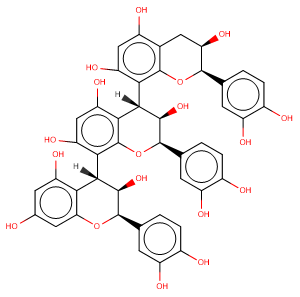
Procyanidin C1
CAS No. 37064-30-5
Procyanidin C1( —— )
Catalog No. M21659 CAS No. 37064-30-5
Procyanidin C1 is a natural product with anti-inflammatory effects and induces apoptosis.
Purity : >98% (HPLC)
 COA
Datasheet
HNMR
HPLC
MSDS
Handing Instructions
COA
Datasheet
HNMR
HPLC
MSDS
Handing Instructions
| Size | Price / USD | Stock | Quantity |
| 5MG | 290 | Get Quote |


|
| 10MG | 483 | Get Quote |
|
| 25MG | 771 | Get Quote |
|
| 50MG | 1035 | Get Quote |
|
| 100MG | Get Quote | Get Quote |
|
| 200MG | Get Quote | Get Quote |
|
| 500MG | Get Quote | Get Quote |
|
| 1G | Get Quote | Get Quote |
|
Biological Information
-
Product NameProcyanidin C1
-
NoteResearch use only, not for human use.
-
Brief DescriptionProcyanidin C1 is a natural product with anti-inflammatory effects and induces apoptosis.
-
DescriptionProcyanidin C1 is a natural product with anti-inflammatory effects and induces apoptosis.
-
In VitroCell Cycle Analysis Cell Line:MCF-7 and MDA-MB-231 cell lines Concentration:35 μg/mL Incubation Time:48 h Result:Induced the cell cycle arrest at the S-phase in MCF-7 and MDA-MB-231 cell lines.Cell Cytotoxicity Assay Cell Line:MCF-7 and MDA-MB-231 cell lines Concentration:6.25-100 μg/mL Incubation Time:48 h Result:Inhibited cell proliferation of MCF-7 and MDA-MB-231 cells with IC50 values of 31.5 and 36.6 μg/mL and showed a higher cytotoxic activity to MDA-MB-231 than tamoxifen.
-
In VivoAnimal Model:Non-obese diabetes and severe combined immunodficiency mice with PSC27 and PC3 cancer cells injection, and pre-treated with mitoxantrone (MIT) Dosage:20 mg/kg Administration:Intraperitoneal injection; 20 mg/kg; 2 weeks after the first MIT dose and then delivered biweekly Result:Remarkably enhanced tumour regression (55.2% reduction in tumour size compared with MIT alone; 74.9% reduction in tumour volume compared with the placebo treatment) and depleted the majority of senescent cells in chemotherapy treated animals.Animal Model:24-27 months of age mice (both sexes)Dosage:20 mg/kg Administration:Oral gavage; 20 mg/kg; for three consecutive days Result:Enhanced the median post-treatment lifespan with 64.2% and decreased the mortality hazard than the vehicle-treated group.
-
Synonyms——
-
PathwayApoptosis
-
TargetApoptosis
-
RecptorApoptosis
-
Research Area——
-
Indication——
Chemical Information
-
CAS Number37064-30-5
-
Formula Weight866.77
-
Molecular FormulaC45H38O18
-
Purity>98% (HPLC)
-
SolubilityIn Vitro:?DMSO : 100 mg/mL (115.37 mM)
-
SMILES[H][C@]1([C@@H](O)[C@H](Oc2cc(O)cc(O)c12)c1ccc(O)c(O)c1)c1c(O)cc(O)c2c1O[C@@H]([C@H](O)[C@@]2([H])c1c(O)cc(O)c2C[C@@H](O)[C@H](Oc12)c1ccc(O)c(O)c1)c1ccc(O)c(O)c1
-
Chemical Name——
Shipping & Storage Information
-
Storage(-20℃)
-
ShippingWith Ice Pack
-
Stability≥ 2 years
Reference
1.Sun P Li K Wang T et al. Procyanidin C1 a Component of Cinnamon Extracts Is a Potential Insulin Sensitizer That Targets Adipocytes[J]. Journal of Agricultural and Food Chemistry 2019 67(32).
molnova catalog



related products
-
TJ191
TJ191 is a selective anti-cancer agent, targeting low TβRIII-expressing malignant T-cell leukemia/lymphoma cells.
-
MC4033
MC4033 is a selective lysine acetyltransferase 8 (KAT8) inhibitor (IC50: 12.1 μM) with anticancer effects, induces apoptosis, and can be used for the study of non-small cell lung cancer.
-
Sodium Oxamate
Sodium Oxamate is an LDH inhibitor.?Sodium oxamate (SO) induces G2/M cell cycle arrest via downregulation of the CDK1/cyclin B1 pathway and promotes apoptosis through enhancement of mitochondrial ROS generation.
